

Parts Department
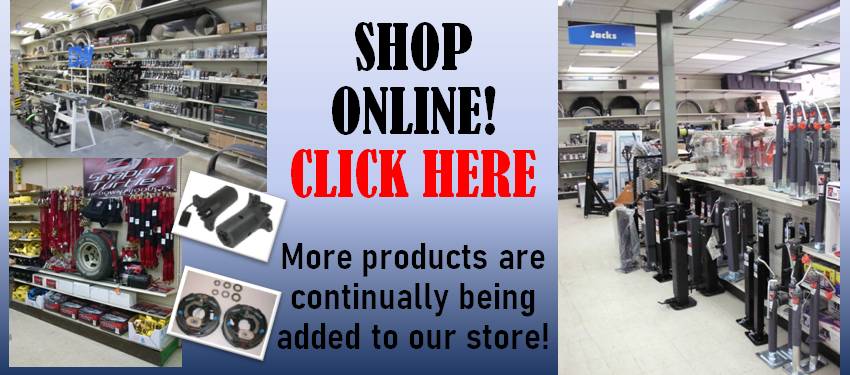
Click Here to Search & Shop Online!
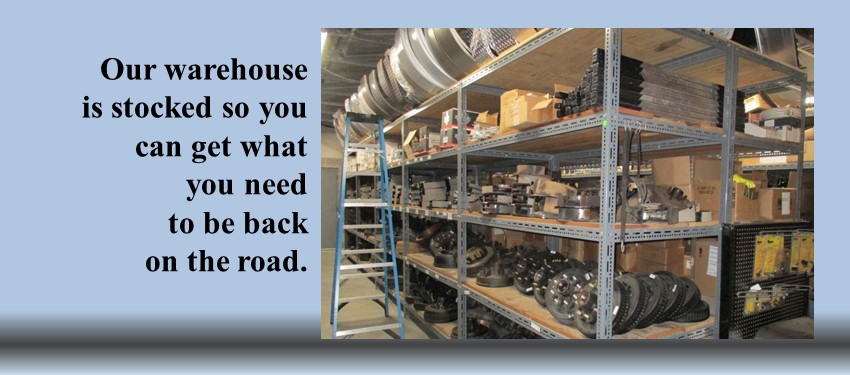
Our parts department is ready to handle all your trailer and aftermarket needs. Realizing that when you need parts, you need them quickly so you can get your trailer back into use so we have an extensive selection of parts in stock and ready to go. We are available for on-site problem solving and consultation. We also offer direct ship and next day shipping for those customer who need to have them delivered.
Our Parts Department is waiting to assist you. Come in and view our 5,000 square foot showroom today! Or visit our Online Parts Store!

Trailer Tire & Wheel Guide
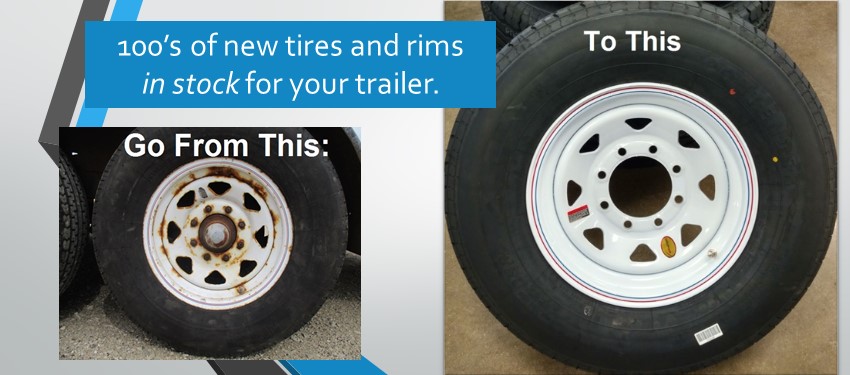
Replacing trailer tires and wheels doesn't have to be complicated. A few basic specifications will help you find the right replacement.
WHEELS
Bolt Pattern
The bolt pattern tells you the number of lug holes and the diameter of the circle they form.
For example:
- 5 on 4.5" = 5 lug holes on a 4.5" bolt circle
- 6 on 5.5" = 6 lug holes on a 5.5" bolt circle
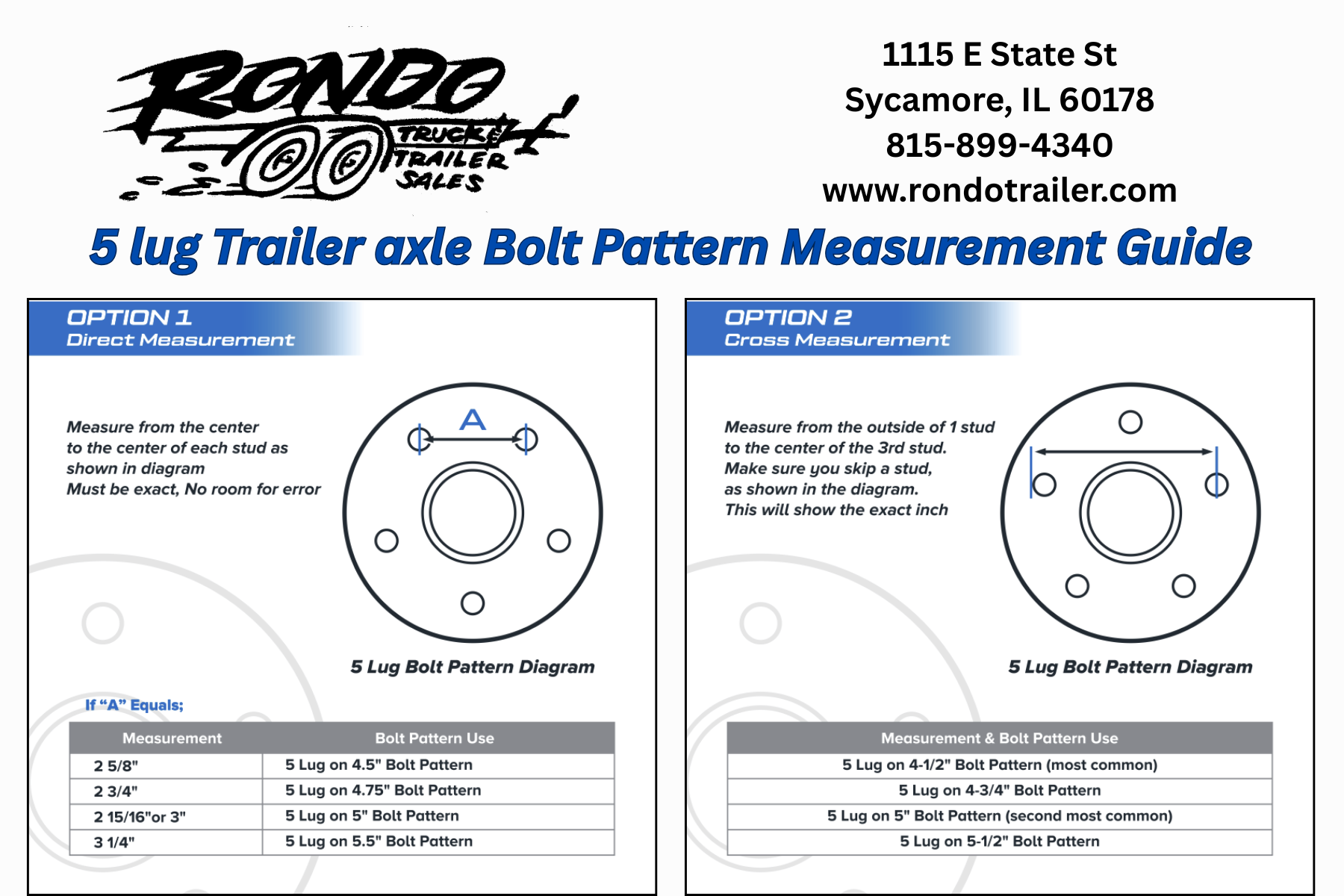
The replacement wheel must have the correct bolt pattern to fit your trailer's hub. Measure carefully with 5 lug wheels since there is are FOUR different bolt patterns and only a 1/4" difference between 3 of them. Use this measuring guide below or bring your wheel in with you so we can measure it for you.
Pilot Diameter
The pilot diameter is the size of the center hole in the wheel. It needs to be compatible with the trailer's hub.
Offset
Offset describes where the wheel's mounting surface sits in relation to the center of the wheel.
The correct offset helps ensure the tire and wheel have adequate clearance from the trailer frame, suspension, and fenders. When replacing a wheel, matching the original specifications is usually the safest choice.
Wheel Size
Wheel diameter and width must match the tire being used. Common trailer wheel sizes include 12", 13", 14", 15", 16" and 17.5".
TIRES
How to Read a Trailer Tire Size
The tire size is printed on the sidewall. A common example is:
ST225/75R15 Load Range D
- ST = Special Trailer
- 225 = Tire width in millimeters
- 75 = Aspect ratio
- R = Radial construction
- 15 = Wheel diameter
- Load Range D = Tire's load rating
You may also see smaller trailer tires listed as:
5.30-12 Load Range C
This indicates a 5.30" tire for a 12" wheel with a Load Range C rating.
Special Trailer (ST) Tires
ST tires are specifically designed for trailer use, including the loads and stresses associated with towing.
When replacing trailer tires, don't choose a tire based on size alone. Make sure it is appropriate for trailer use and has the required load capacity. Passenger-car tires and other tire types should NOT be substituted simply because they are the same physical size.
Radial Tires
Radial trailer tires are a popular choice for trailers that see regular highway use. They generally offer:
- Good highway performance
- Longer tread life
- Better heat management
- Lower rolling resistance
Load Range
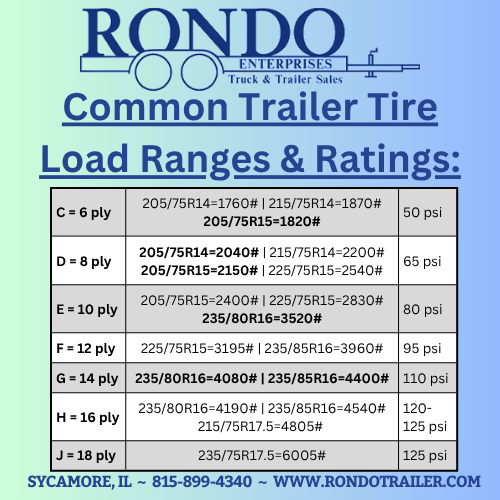
The load range indicates the tire's carrying capacity at its specified inflation pressure.
 |
|
|---|---|
|
Important: Load range alone does not tell you the exact weight a tire can carry. |
|
|
Capacity varies by tire size and manufacturer. Always check the tire sidewall for the actual maximum load and inflation pressure. |
|
|
Your replacement tires should have enough combined capacity to support the trailer's GVWR (Gross Vehicle Weight Rating). |
|
What Do You Need?
When replacing trailer tires or wheels, having the following information makes finding the correct replacement easier:
Tires
- Tire size
- Radial construction
- Load range
- Maximum load rating
Wheels
- Wheel diameter and width
- Bolt pattern
- Pilot diameter
- Offset
Not sure what you need? Bring in your tire & wheel for us to match up or provide the information from the existing tire and wheel. We're happy to help you find the right replacement.
When in doubt, don't guess. The correct tire and wheel specifications are important for safe trailer operation.
Advertised prices do not include applicable taxes, fees, accessories, or installation. Please review our Sales Policies for complete details.
Rondo Enterprises, Inc
Truck & Trailer Sales
815-899-4340
1115 E State St (Route 64)
Sycamore, IL 60178

Monday - Friday:
8:00 am to 5:00 pm
Saturday:
9:00 am to 1:00 pm
(Service is closed on Sat)
Sunday:
Closed
Also closed for major holidays.



Click here to start designing a building to protect your Car, RV, Equipment, etc! Or come in & we'll help you!